
How Do Designers Decide Which Trends Are Worth Keeping?
Trends don’t disappear as quickly as headlines suggest. Some evolve, some fall out of favor, and others were never as versatile as they seemed to begin with. What matters more than whether something is “in” or “out” is how it performs in a real space.
Materials, patterns, and layouts all behave differently depending on how they’re used, what they’re paired with, and how a room is meant to function. The difference between a trend that holds up and one that doesn’t usually comes down to those decisions.
Here’s how designers actually evaluate which trends are worth keeping and which ones aren’t.
Do Interior Design Trends Really Go “Out”?
Not always. Most trends don’t suddenly stop working; they just become less effective when they’re used without enough thought. Designers rarely look at a trend and decide it’s universally in or out. They look at how it functions in the room, how it relates to everything around it, and whether it still feels intentional.
Designers typically evaluate trends based on:
- how materials hold up over time
•how patterns, finishes, and shapes work together - whether the room feels layered and resolved rather than forced
When those fundamentals are in place, a trend has a much better chance of feeling current rather than contrived.
When Does Boucle Furniture Actually Work?
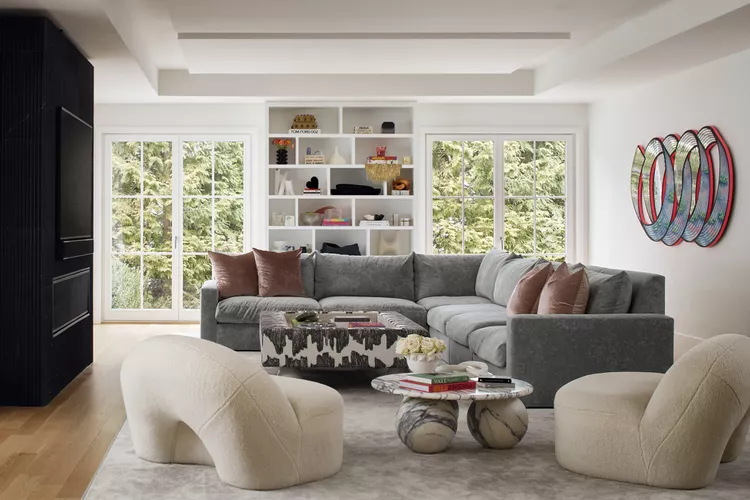
Boucle continues to appeal because of its texture and softness. Visually, it adds dimension to modern spaces that might otherwise feel flat.
Where designers start to hesitate is in how it performs over time. In real homes, it can present challenges:
- durability in high-traffic areas
- difficulty with cleaning
- wear over time, particularly in homes with pets
That doesn’t make boucle a bad choice. It just makes it more appropriate for selective use rather than everyday seating.
Is Chevron Pattern Still Relevant?
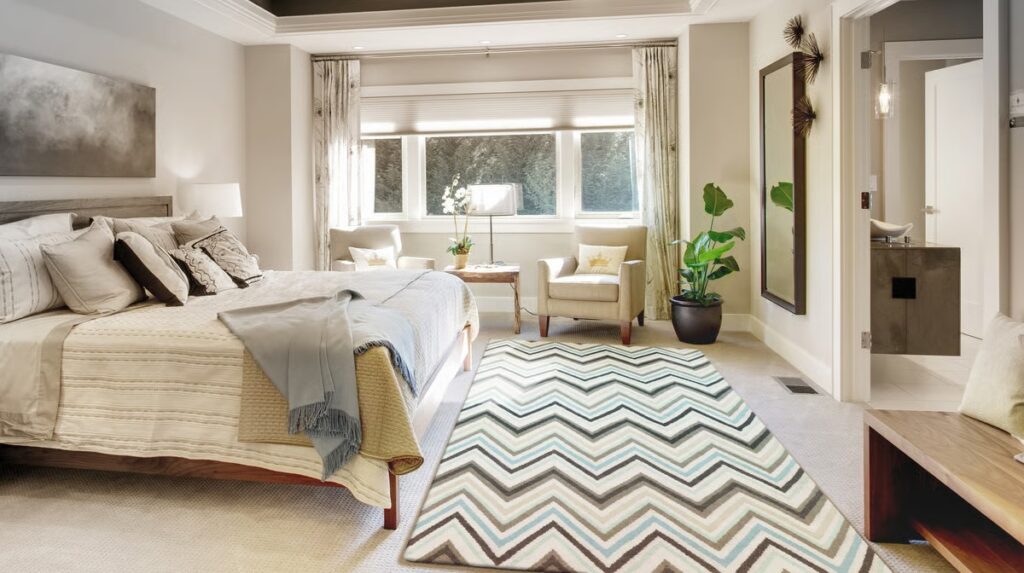
Chevron is frequently categorized as a dated pattern, largely due to overuse in past trend cycles. However, geometric repetition is foundational in design.
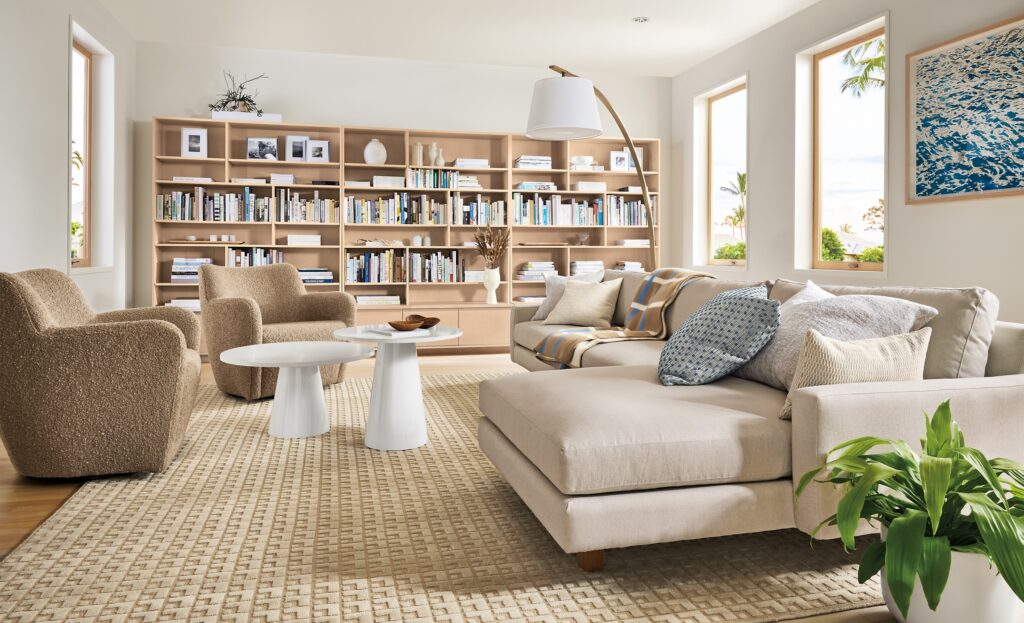
When used with restraint and at the appropriate scale, chevron reads as structured rather than trend-driven. It becomes problematic only when it dominates a space or is layered without variation. In more restrained applications, such as an area rug, it continues to function effectively within modern interiors.
Are Jewel-Toned Sofas Going Out of Style?
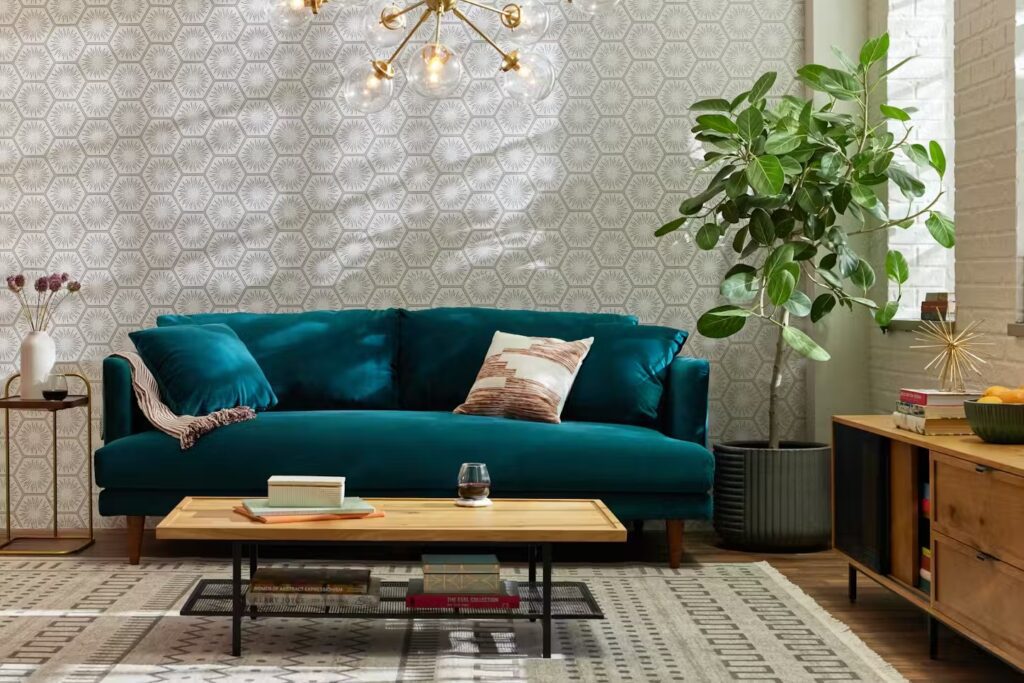
Neutral upholstery is often positioned as the safer, longer-term choice. As a result, bold sofas are sometimes labeled as outdated. Designers tend to use color more selectively rather than avoiding it altogether.
Jewel-toned sofas tend to work when:
- surrounding elements are more restrained
- color is echoed elsewhere in the space
- scale and proportion are carefully considered
Used in isolation, they can feel dominant. Used as part of a larger composition, they can elevate the entire room.
Is Open Concept Design Losing Relevance?
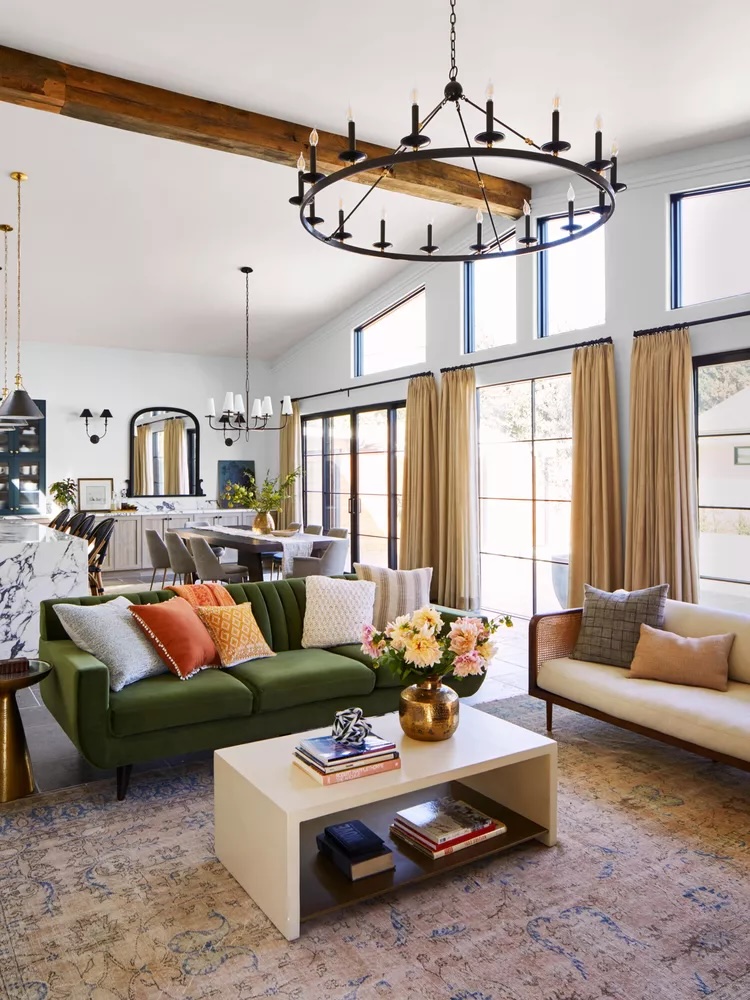
Open concept layouts are often described as falling out of favor. The reality is that they require more deliberate design decisions.
Without walls, designers must define space through:
- furniture placement
- lighting
- material transitions
Challenges often arise with:
- television placement
- creating distinct zones
- maintaining visual balance
Open layouts aren’t going away, but they do require more intentional planning. They are becoming more dependent on thoughtful planning.
Is Ikat Fabric Still Worth Using?
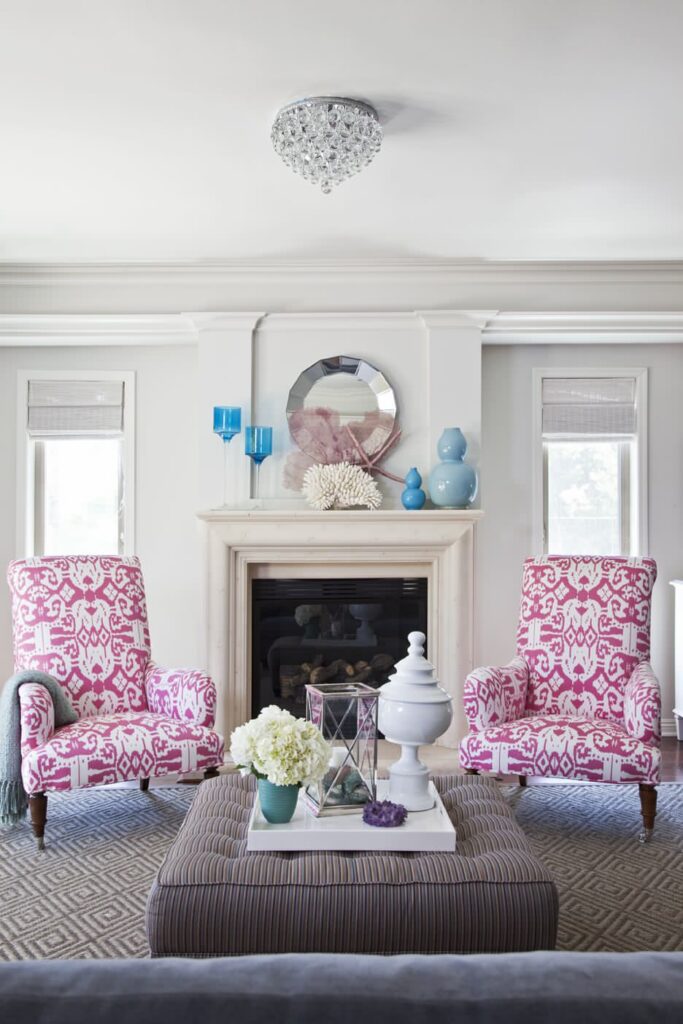
Ikat remains relevant because it introduces variation and softness that more rigid patterns often lack.
Designers use it to:
- break up structured spaces
- add visual movement
- layer traditional and modern elements
Like many patterns, it becomes less effective when overused or applied too literally. When balanced, it continues to feel organic and current. It tends to work best when it’s layered into a space rather than driving the entire design.
Is Mid-Century Modern Overdone?
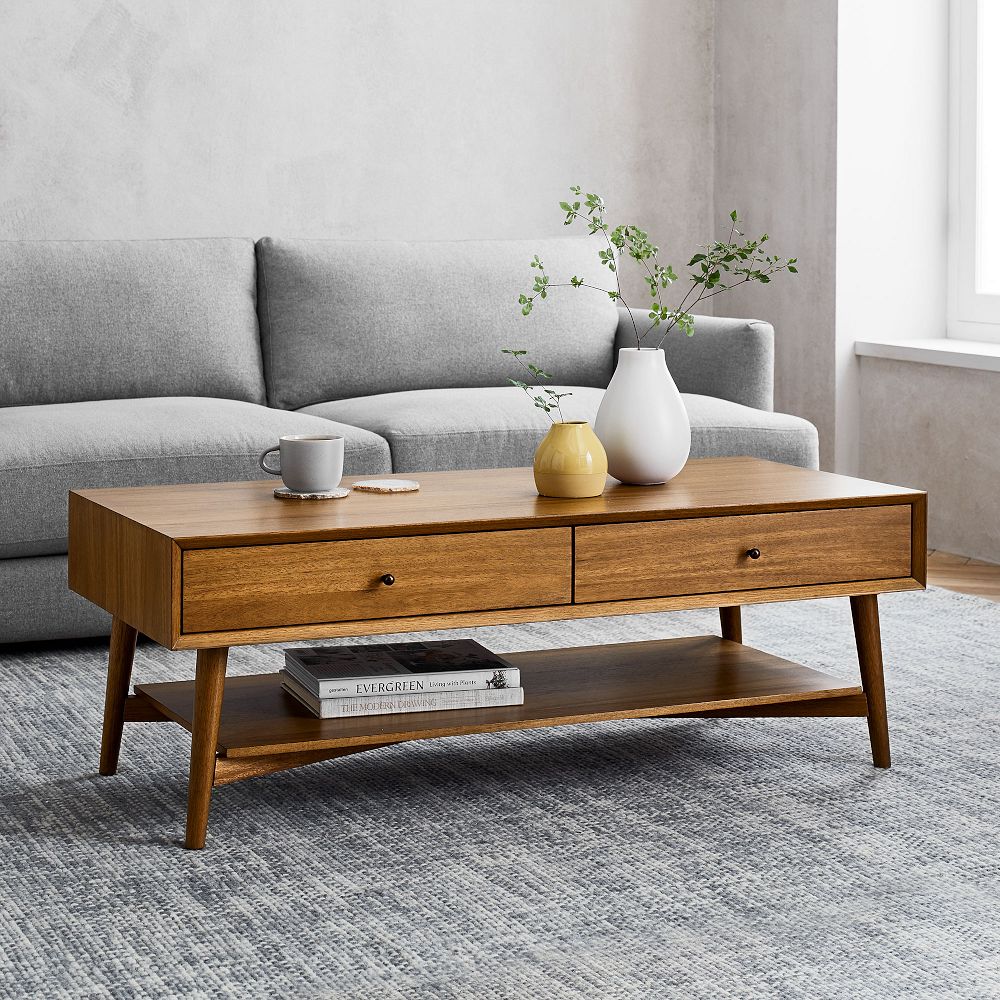
Mid-century modern furniture remains widely used, but full rooms built entirely around the style can feel overly referential. Designers tend to avoid building an entire room around one era.
Instead, they:
- integrate select mid-century pieces
- layer them with contemporary elements
- balance clean lines with softer forms
This approach allows the style to remain relevant without becoming thematic.
What Actually Makes a Space Feel Current?
Most trends don’t fail on their own, they fall short when they’re applied too literally or without balance. Spaces feel current when they are resolved, not when they follow trends.
Designers focus on:
• proportion and scale
• material longevity
• how the space functions day to day
• balance between contrast and restraint
When scale, proportion, and context are right, even the most debated design choices can feel intentional and well-resolved.
If you’re not sure which elements in your space are working—and which ones are quietly throwing things off—our team can help you sort through it. Book a complimentary design consultation and we’ll guide you toward decisions that feel cohesive, functional, and right for how you actually live.