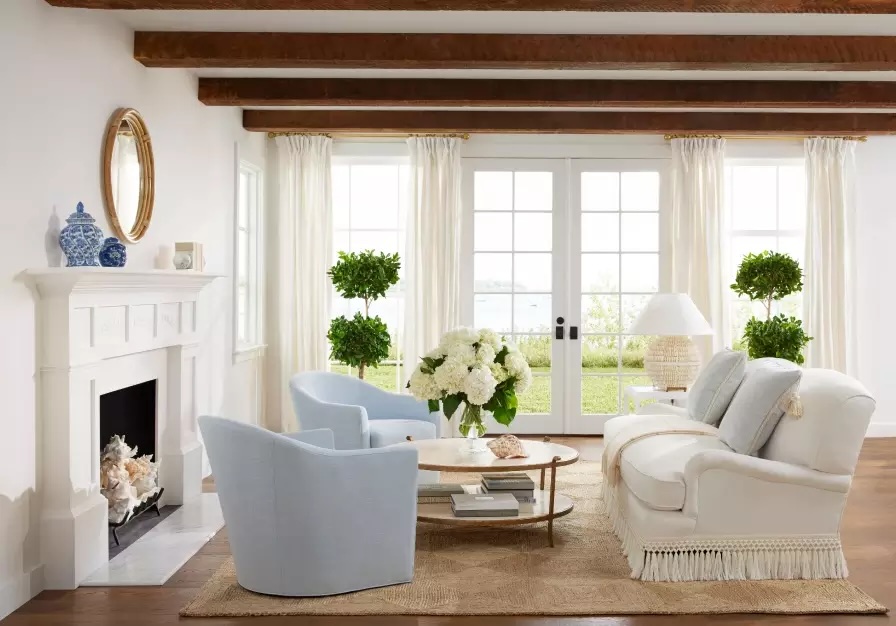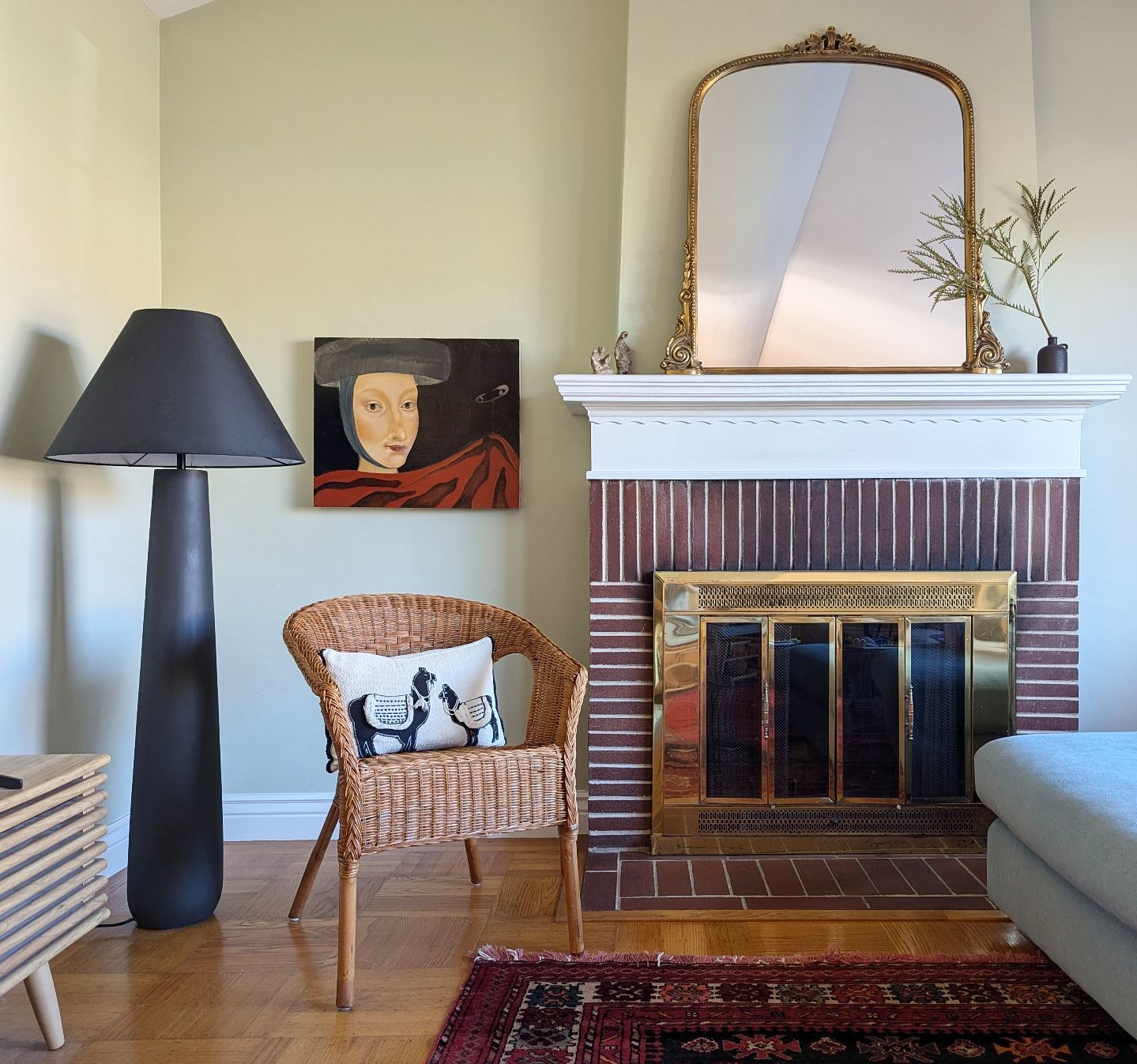

The Modern Living Room Principles Designers Still Rely On
Modern living rooms that stand the test of time are shaped by a set of design principles that guide decisions long after what’s “in” has changed. While materials, silhouettes, and colors evolve, the underlying rules remain surprisingly consistent.
Interior designers rely on these principles not because they’re rigid, but because they prevent modern spaces from feeling flat, chaotic, or prematurely dated.
Here are the modern interior design rules our designers swear by:
Why Do Modern Living Rooms Need Clear Hierarchy?
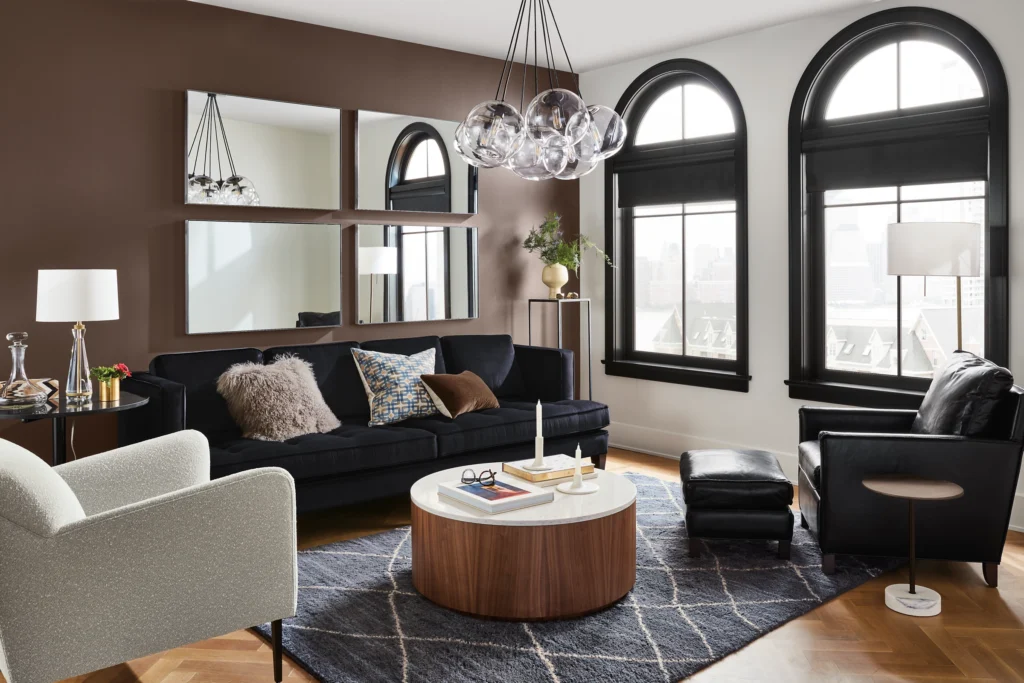
Modern living rooms work best when a clear hierarchy guides the space. Designers don’t treat every element equally. Instead, they establish visual order so the room feels intentional rather than busy or undecided.
Without hierarchy, modern spaces often default to neutrality everywhere, resulting in rooms that feel unfinished rather than refined.
Designers consistently see hierarchy break down when:
- Furniture pieces compete instead of supporting one another
- Decor is evenly distributed without a focal point
- Contrast is avoided in favor of safety
When hierarchy is clear, the room feels calm and confident, even when bold elements are present.
Why Do Designers Start with an Anchor Piece?
Designers begin modern living room layouts by identifying a single anchor piece that sets the tone for the entire space. This anchor establishes mood, color direction, and visual weight, allowing the rest of the room to fall into place more naturally.
Without an anchor, decisions become reactive instead of cohesive.
In practice, designers often see living rooms struggle when:
- Color choices aren’t tied back to a larger statement element
- Furnishings are chosen individually rather than as part of a system
- The room defaults to beige-on-beige with no contrast
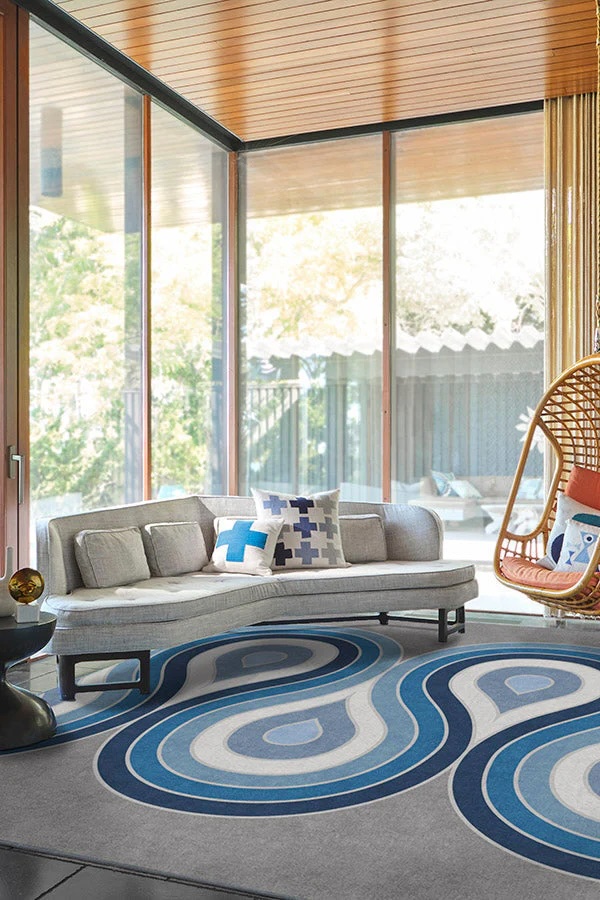
This is where rugs often become the most effective anchor. A rug with depth, contrast, or multiple colors provides a framework that informs everything from upholstery to artwork. When that anchor is missing, the room can feel visually flat even if all the pieces are right.
Ruggable
Why Restraint Matters More Than Variety in Modern Spaces
Modern design relies on restraint to create clarity. Adding more elements doesn’t necessarily add interest. In fact, it often does the opposite.
Designers intentionally limit competing materials, colors, and focal points to let the room breathe. This becomes especially important in open or light-filled spaces where excess sameness can drain energy instead of creating cohesion.
From experience, designers see modern living rooms lose impact when:
- Every surface repeats the same tone
- Contrast is avoided entirely
- Variety replaces intentional contrast
Restraint allows standout pieces to feel deliberate instead of accidental, which is what gives modern spaces longevity.
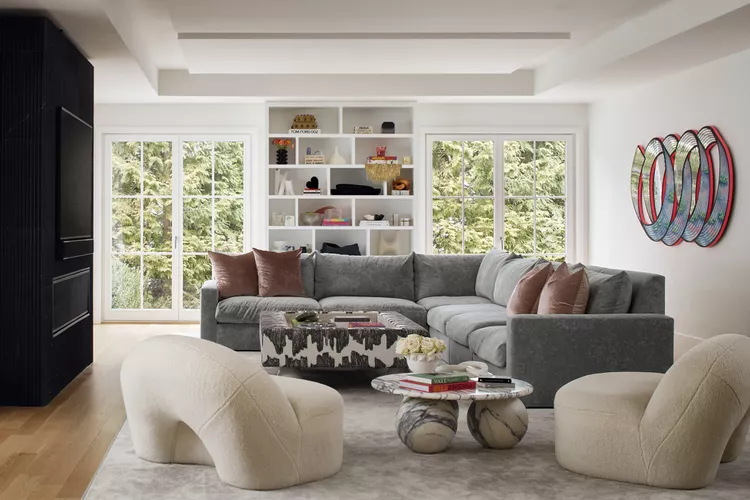
Why Modern Living Rooms Are Designed as Systems, Not Collections
Designers don’t approach modern living rooms as a series of individual purchases. They design them as systems where each element supports the others. Furniture, lighting, color, and layout are all considered together rather than in isolation.
This systems-based thinking is what separates rooms that feel timeless from those that feel momentary.
When the system works:
- Color choices feel connected rather than repetitive
- Circulation paths are clear and intuitive
- Contrast is intentional instead of decorative
Modern living rooms that age well are the result of these layered decisions, not one standout trend.
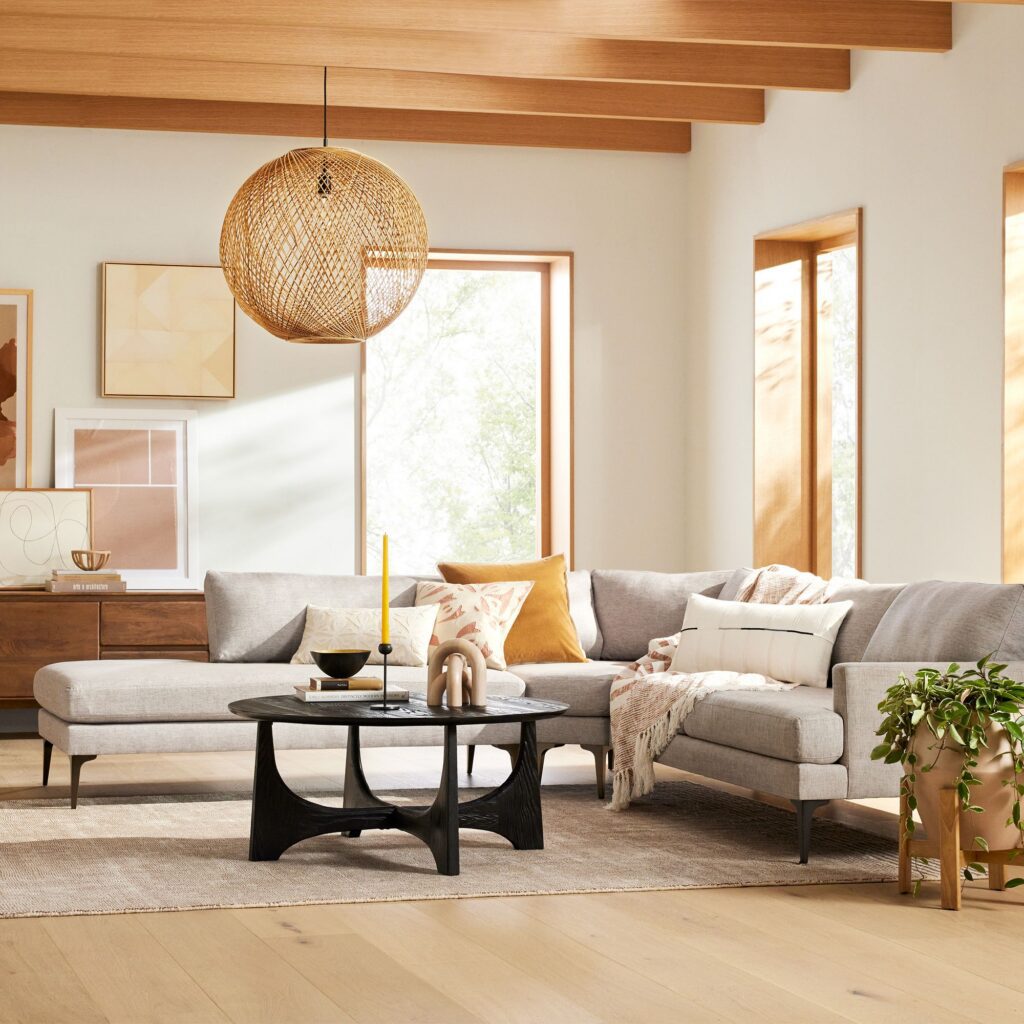
The Principles That Keep Modern Living Rooms Grounded
Modern living room design is all about understanding which principles continue to work as styles evolve. Clear hierarchy, anchor-first thinking, restraint, and systems-based design are rules interior designers still stand by because they prevent modern spaces from feeling dated before their time.
When these rules guide decisions, modern living rooms stay relevant, comfortable, and visually grounded long after trends shift.
Need help with your modern interior design project? We can help. Book a complimentary consultation and let’s discuss.