

How to Layer Rugs Without It Looking Like a Mistake
Layered rugs are showing up everywhere in design inspiration, but it’s one of those ideas that’s much harder to execute than it looks. When it works, it adds depth, contrast, and a sense of intention to a space. When it doesn’t, it can feel awkward, bulky, or like something is being covered up.
Layering rugs successfully depends on how you do it. The materials, proportions, and contrast all have to work together, or you risk throwing off the entire room. So, how do you do it like an interior designer? Read on for all of our tips.
When Does Layering Rugs Work?
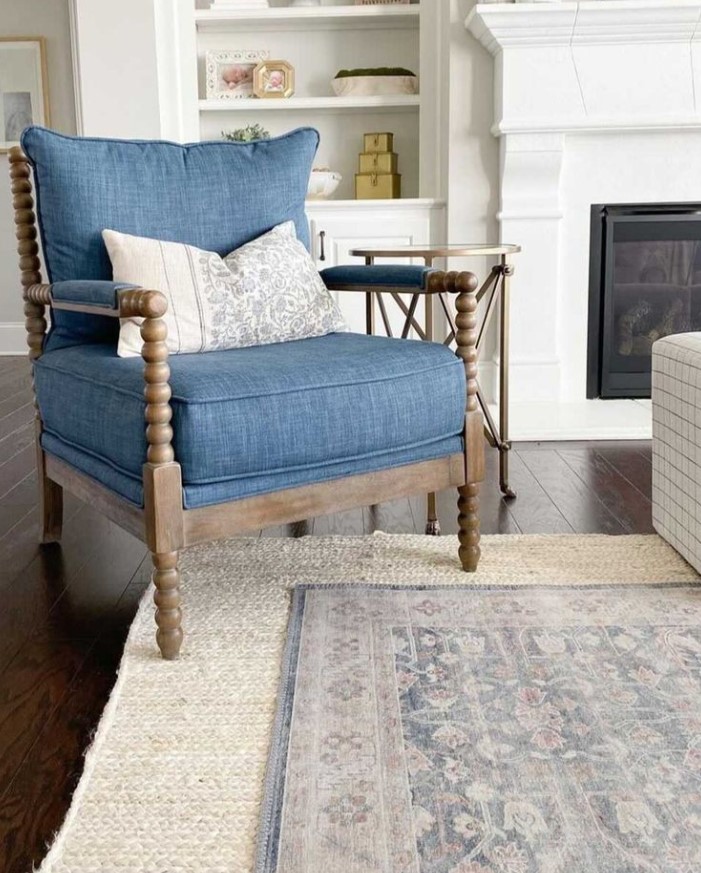
Layering rugs works best when there is a clear contrast between the base layer and the top layer. Designers typically look for:
- A neutral or low-contrast rug on the bottom
- A smaller rug layered on top
- Rugs that are noticeably different in texture, pattern, or shape
The goal is to make the layering feel balanced and natural. You should be able to clearly see both rugs and understand why they’re paired together.
Why Does Layering Rugs Sometimes Look Like a Mistake?
Most of the time, it comes down to lack of contrast. When the top rug is too similar in color or texture to what’s underneath, the layering effect disappears. Instead of adding dimension, it looks like a second version of the same surface.
This is especially noticeable when:
- The rug closely matches the flooring beneath it
- Both layers have similar textures
- The shapes don’t create a clear visual distinction
Without contrast, layering rugs can fall flat rather than elevated.
Can You Layer Rugs Over Carpet?
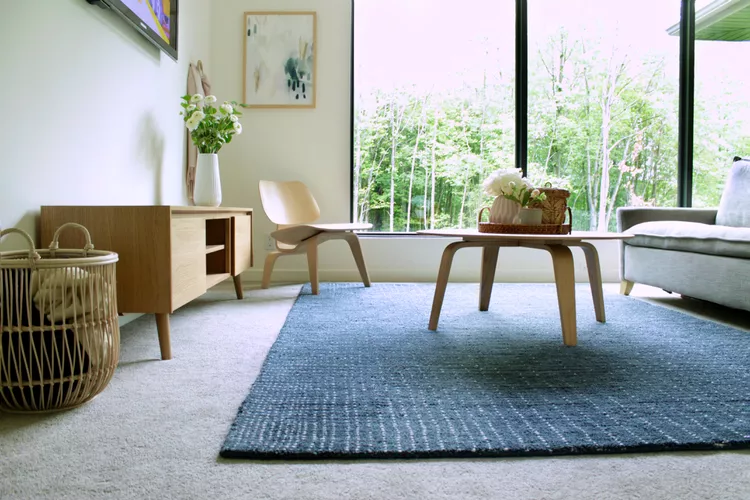
Technically, yes—but we’ve found in practice, it rarely works well. Layering over plush carpeting tends to create problems:
- The top rug doesn’t sit flat
- Edges start to lift or curl
- The surface can feel unstable underfoot
Visually, it can also read as if something is being covered up rather than an intentional design choice. There are exceptions, but in most cases, layering rugs directly over carpet, especially thicker carpet, creates more issues than it solves.
What Rug Combinations Work Best?
The most successful combinations create a clear hierarchy between the two layers. We tackle layering rugs for our clients by pairing:
- A flatweave or neutral rug on the bottom
- A smaller, more distinctive rug on top
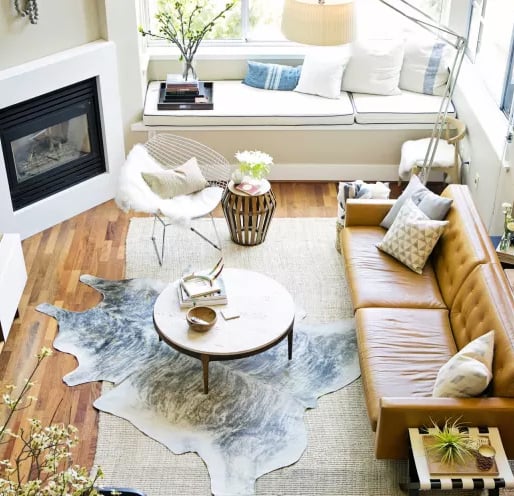
- Contrasting shapes, like rectangular with organic
One of the easiest ways to get this right is layering a cowhide over a neutral base rug, if your design style supports this. The contrast in both shape and texture makes the combination feel intentional without overcomplicating it.
Where Should You Use Layered Rugs?
Layered rugs tend to work best in spaces where you want to create a focal point or add visual interest without introducing more furniture.
They’re most commonly used in:
- Living rooms to define a seating area
- Bedrooms to add softness and layering
- Larger spaces that need visual grounding
In smaller or more crowded areas, layering can quickly feel excessive instead of meaningful.
It Only Works When It’s Done Right
Layering rugs is about adding contrast in a way that feels considered. When the proportions are right, the textures are distinct, and the placement makes sense, layering can elevate a space. When those elements aren’t aligned, it tends to feel like something is off, even if you can’t immediately tell why.
If you’re unsure whether layering rugs will work in your space, or how to get the proportions right, our team can help you figure it out. Book a complimentary design consultation and we’ll guide you toward choices that feel balanced, intentional, and easy to live with.