

Why Lighting and Layout Matter in the Dining Room
Dining rooms are tricky because everything has to relate back to the table. The chandelier, the chairs, the artwork, even how the room is centered—all of it ties to that one piece. When that relationship is off, the whole space starts to feel disjointed, even if each item works on its own.
We see this a lot with our clients. The light fixture is a little too high, or it’s centered to the room instead of the table. The artwork is there, but it’s not doing much. Nothing is wildly wrong, but the room never quite comes together.
That’s what we’re going to fix here. Where lighting should sit, what it should align to, and how to handle artwork so the room actually works as a whole. Here are our dining room design tips for how to get your lighting and layout right:
How Lighting Placement Changes the Entire Room
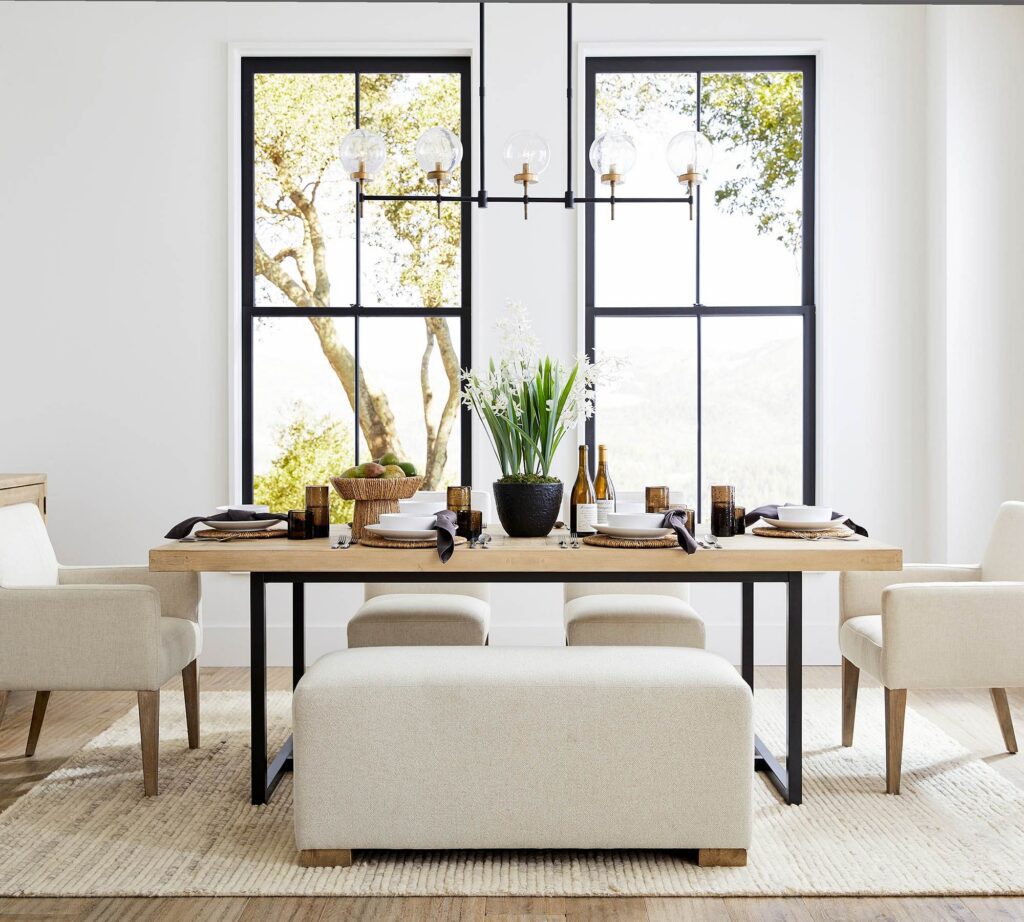
Lighting is one of the most defining elements in a dining room, and its placement directly affects how the space reads. When a chandelier is positioned too high, it disconnects from the table and starts to feel like a ceiling fixture rather than part of the composition.
We prefer a more considered approach:
- The bottom of the fixture should sit approximately 30–36 inches above the table
Proper fixture placement keeps the light visually tied to the table and establishes a clear focal point. When the height is correct, the entire room feels more grounded. When it’s not, the space loses that sense of cohesion.
Why Centering Should Follow the Table, Not the Space
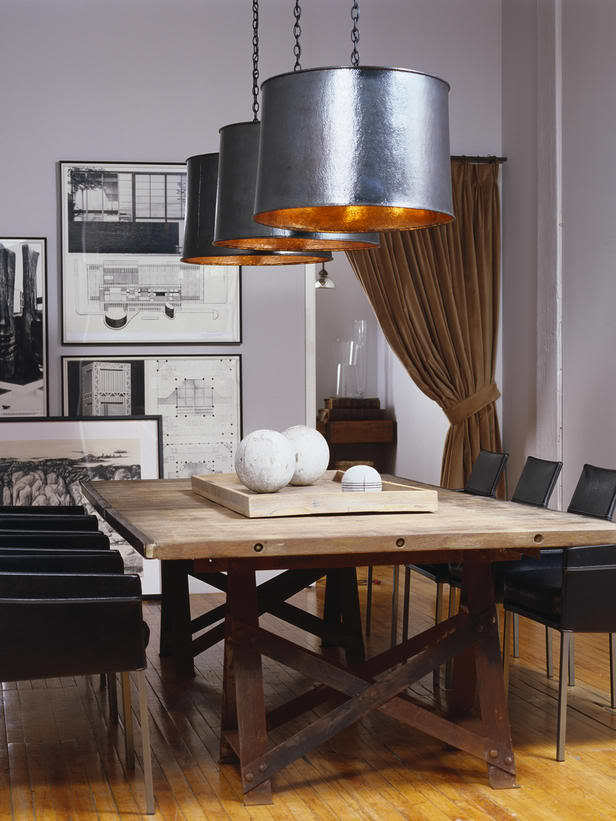
In modern interiors, alignment is critical, and it often comes down to what the room is organized around, which, typically, is the dining room table. Remember, then, the dining table is the anchor, not the room itself.
And so, when a light fixture centers on the room itself rather than the table, the misalignment is subtle but noticeable. The space starts to feel slightly unresolved, even if everything else is in place. This is especially common in:
- open-concept layouts
- rooms where furniture has shifted over time
- spaces that aren’t perfectly symmetrical
Re-centering the fixture to the table restores balance and brings the composition back into focus.
Why Artwork Needs to Balance the Room
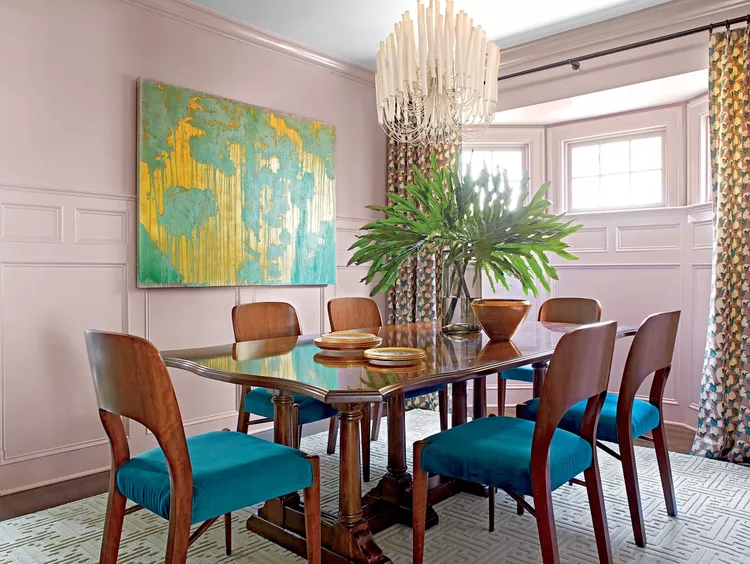
Dining rooms already have repetition built into them—multiple chairs, consistent shapes, and a strong central element. As a result, smaller pieces of artwork can start to feel fragmented rather than cohesive. We teach our clients a better approach:
- Use one larger piece of artwork
- allow it to balance the wall
- keep the visual focus clear
This creates contrast against the room’s repetition and gives the eye a place to settle. When artwork is scaled correctly, it supports the space instead of competing with it.
When The Room Is Resolved, You Feel It
In a dining room, a few key decisions carry a lot of weight. When the light is hung at the right height, centered to the table, and the artwork actually anchors the wall, the whole setup starts to come together. You’re not noticing what’s off or trying to work around anything; it just works the way it should.
And if you’re working through these decisions in your own space, our team can help you see what’s working and what needs to shift. Whether you’re in one of our locations or working with us virtually, you can book a complimentary design consultation and we’ll help you create a space that feels intentional, balanced, and complete.